
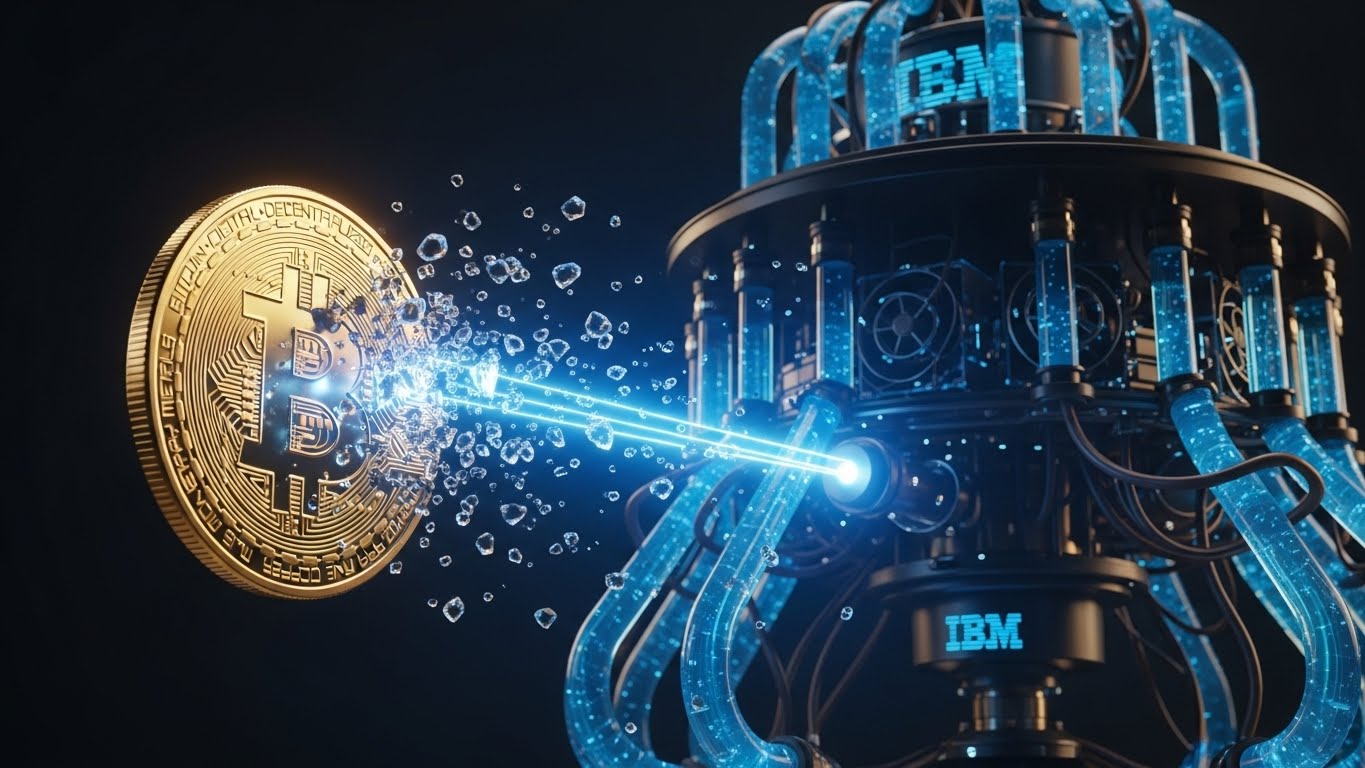
The threat of “Quantum Supremacy” over blockchain technology is no longer science fiction. By 2026, experts predict that a sufficiently powerful quantum computer could potentially crack the SHA-256 encryption that secures the Bitcoin network. If this “What If” scenario manifests, the $1 trillion crypto market could face a total collapse, forcing a radical shift in how we define digital ownership and global financial security.
The Doomsday Clock for Blockchain
Since its inception, Bitcoin has been hailed as unhackable. Its armor is the SHA-256 hashing algorithm—a cryptographic wall that would take traditional supercomputers billions of years to breach. But there is a new titan in town: The Quantum Computer. Unlike classical bits, quantum qubits can exist in multiple states at once, allowing them to perform calculations at speeds that defy human logic. What if the clock strikes zero in 2026?
The “What If” Scenario: The Morning the Private Keys Broke
Imagine waking up to find that every Bitcoin wallet—including Satoshi Nakamoto’s 1.1 million BTC—is suddenly vulnerable. In this scenario, a state-sponsored quantum processor (perhaps from the US or China) achieves the ability to derive a “Private Key” from a “Public Key” using Shor’s Algorithm.
- The Flash Crash: Within minutes, the price of BTC would plummet toward zero as trust evaporates.
- The Banking Domino Effect: It wouldn’t just be crypto. Most modern banking encryptions rely on similar cryptographic principles. If Bitcoin falls, your traditional bank account might be next.
- The Zero-Trust Economy: We would enter an era where digital signatures can no longer be trusted, effectively “resetting” the digital world to the pre-internet age.
Quantum-Resistant Ledger: Is There a Cure?
Fortunately, the tech world isn’t sitting still. Developers are already working on Post-Quantum Cryptography (PQC).
- The Hard Fork: What if Bitcoin undergoes a massive “Hard Fork” to a quantum-resistant algorithm? This would require every user to move their funds to new “Quantum-Safe” addresses.
- The Race Against Time: The real question is: Can the Bitcoin community agree on a fix before a malicious actor builds the first 10,000-qubit processor?
How to Protect Your Digital Assets
For those living in the Tier 1 markets (US/EU), the advice is shifting:
- Watch the NIST Standards: Follow the National Institute of Standards and Technology as they approve new quantum-safe algorithms.
- Diversify into Cold Storage: While not a perfect shield against quantum, offline storage remains a hurdle for remote AI-driven attacks.
Recommended Reading: