
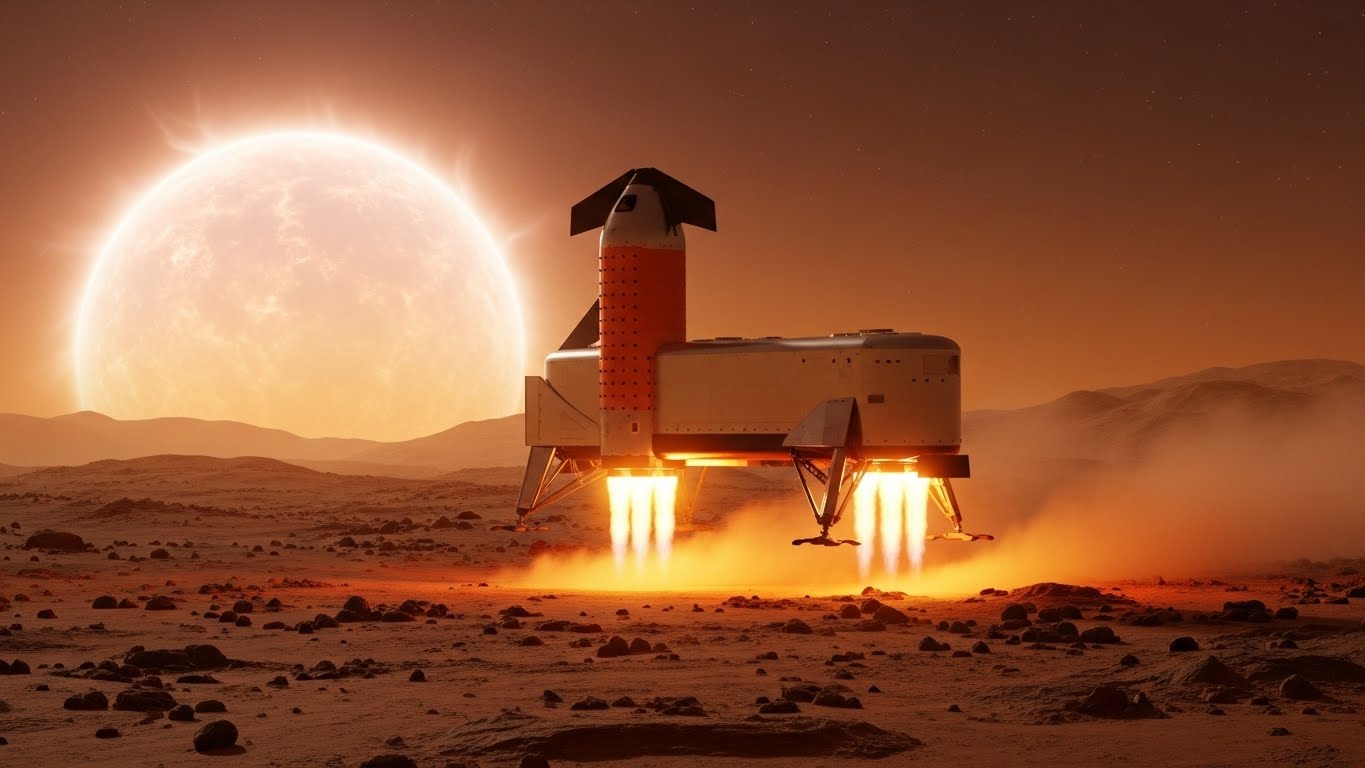
For the first time in 300,000 years, humanity is on the verge of leaving its cradle. With the 2026 launch of the first fully autonomous Mars construction fleet, the goal of a self-sustaining city on the Red Planet by 2040 is no longer a dream—it’s a deadline. What if humans become a multi-planetary species? This move wouldn’t just be a backup plan for Earth; it would trigger the greatest biological and political evolution in human history.
1. The Second Home: Why Mars?
Mars is the only planet where we can realistically build a second civilization. With 24-hour days and frozen water beneath its surface, it is our best shot at survival.
- The Construction Phase: By 2040, we won’t just have astronauts on Mars; we will have “Martian Citizens” living in massive pressurized domes.
- The Resource Bridge: Space mining (asteroids) will fuel the Mars colony, making it economically independent from Earth within two decades.
2. The “What If” Scenario: Life on Two Worlds
A. The Biological Split: Becoming “Martian”
- Gravity Evolution: Mars has only 38% of Earth’s gravity. Children born on Mars would grow taller, have lighter bones, and might never be able to visit Earth because their hearts couldn’t handle the “heavy” gravity.
- Genetic Engineering: To survive radiation, will we need to genetically modify “Martian humans”? We could see the birth of two distinct human species: Homo Sapiens (Earth) and Homo Martis (Mars).
B. The Political Independence: The Martian Republic
- Who Governs Mars? Does the US, China, or SpaceX own Mars? By 2040, a Mars colony might declare independence, as they won’t want to follow laws made 225 million kilometers away.
- Interplanetary Law: We would need a new “Galactic Constitution” to manage trade and conflict between the two planets.
C. The Earth-First Debate
- Abandonment or Inspiration? Critics argue that the trillions spent on Mars should be used to fix Earth’s climate. Advocates argue that the technology developed to survive on Mars (water recycling, vertical farming, fusion energy) is exactly what will save Earth.
The Mirror in the Sky
“In my opinion, going to Mars isn’t about escaping Earth; it’s about learning to value it. From TechWhatIf’s perspective, when we look back at our ‘Pale Blue Dot’ from the red dust of Mars, all our earthly conflicts seem small. Becoming multi-planetary is the ultimate ‘insurance policy’ for consciousness. We owe it to the future to ensure that even if Earth faces a catastrophe, the light of human knowledge, art, and love continues to burn somewhere else in the stars.”
Note: This is a speculative ‘What If’ analysis based on current 2026 space exploration roadmaps from NASA and private aerospace companies. Long-term radiation and psychological isolation remain the biggest hurdles for permanent settlement.