
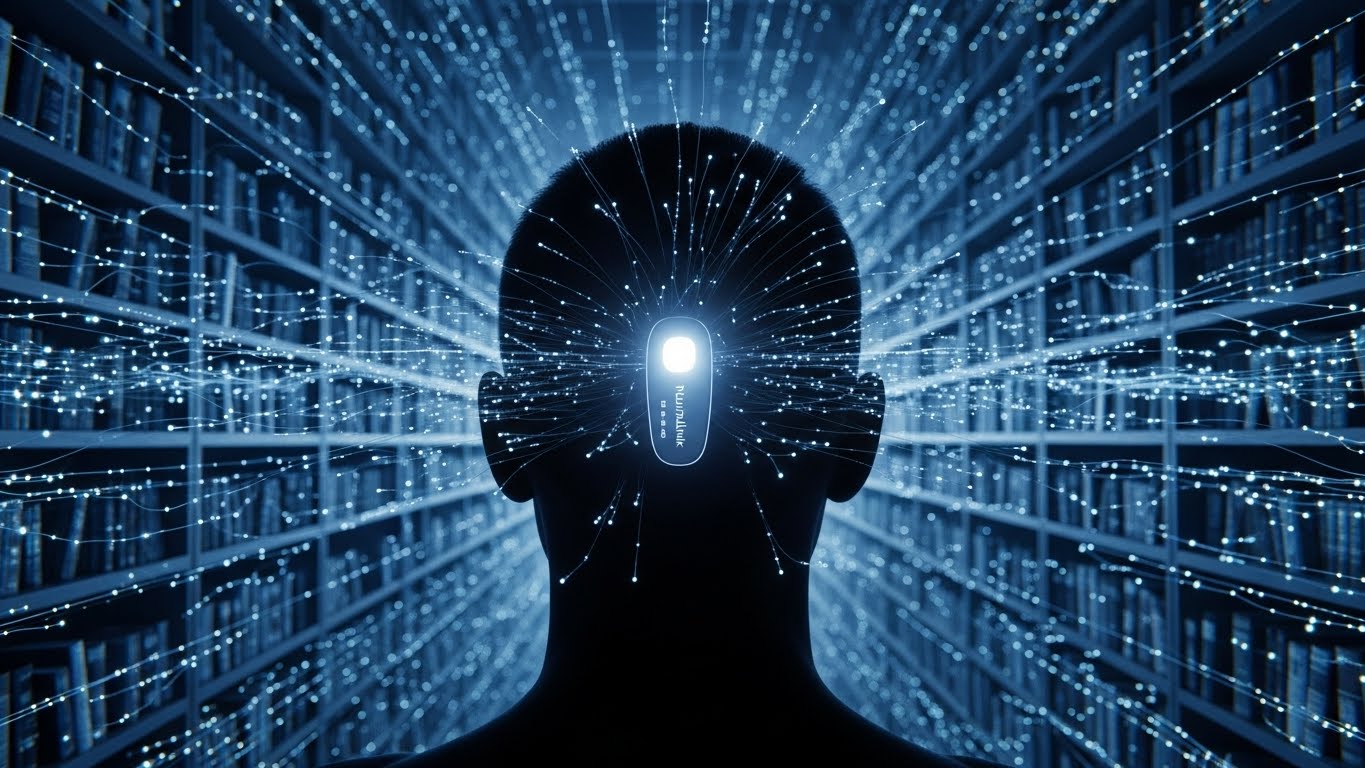
The concept of “Digital Immortality” is moving from science fiction to laboratory reality. If Neuralink or similar Brain-Computer Interfaces (BCI) achieve the ability to encode and upload human memories, it would revolutionize education, trauma therapy, and the very nature of human experience. However, this “What If” scenario also opens a Pandora’s box of cognitive hacking, identity theft, and the loss of mental privacy.
The End of Forgetting
Human memory is fallible—we forget names, dates, and the faces of loved ones. But what if memory became a file format? With the advancement of high-bandwidth neural interfaces, we are approaching a point where the electrochemical signals of our brain can be translated into binary data.
The “What If” Scenario: Life in the Cloud
1. The Education Revolution: Instant Knowledge Imagine “downloading” a new language or a complex skill like surgery in seconds.
- The Death of Traditional Schools: If knowledge can be uploaded, the value of traditional degrees would vanish. The focus would shift from “learning” to “critical thinking.”
- Cognitive Inequality: What if only the wealthy can afford “Premium Knowledge” downloads? This could create a biological class divide between the “Enhanced” and the “Natural.”
2. Digital Immortality: Living Forever If you can upload your memories, do you still need a body?
- The Backup System: Imagine “backing up” your consciousness every night. If a physical accident occurs, your memories could be “restored” into a synthetic body or a digital simulation.
- The Soul Dilemma: Is a digital copy of your memories actually you, or just a perfect recording?
3. The Dark Side: Brain-Jacking and Memory Editing The greatest risk of the Bio-Digital frontier is security.
- Memory Hacking: What if a hacker deletes a traumatic memory but replaces it with a false one?
- Advertising in the Mind: Imagine “Sponsored Memories” where corporations pay to insert positive associations with their products directly into your subconscious.
Technical Hurdles to 2027
To reach this “What If” reality, we must solve the Neural Mapping Problem. We can currently read basic motor signals, but complex memories are scattered across the hippocampus and cortex. We need sensors with a billion-fold increase in sensitivity before we can “copy-paste” a human thought.
As our brains connect to the internet, the threat of a global outage becomes personal. Read about the stakes in our article What If a Global Internet Blackout Lasts for 24 Hours?
