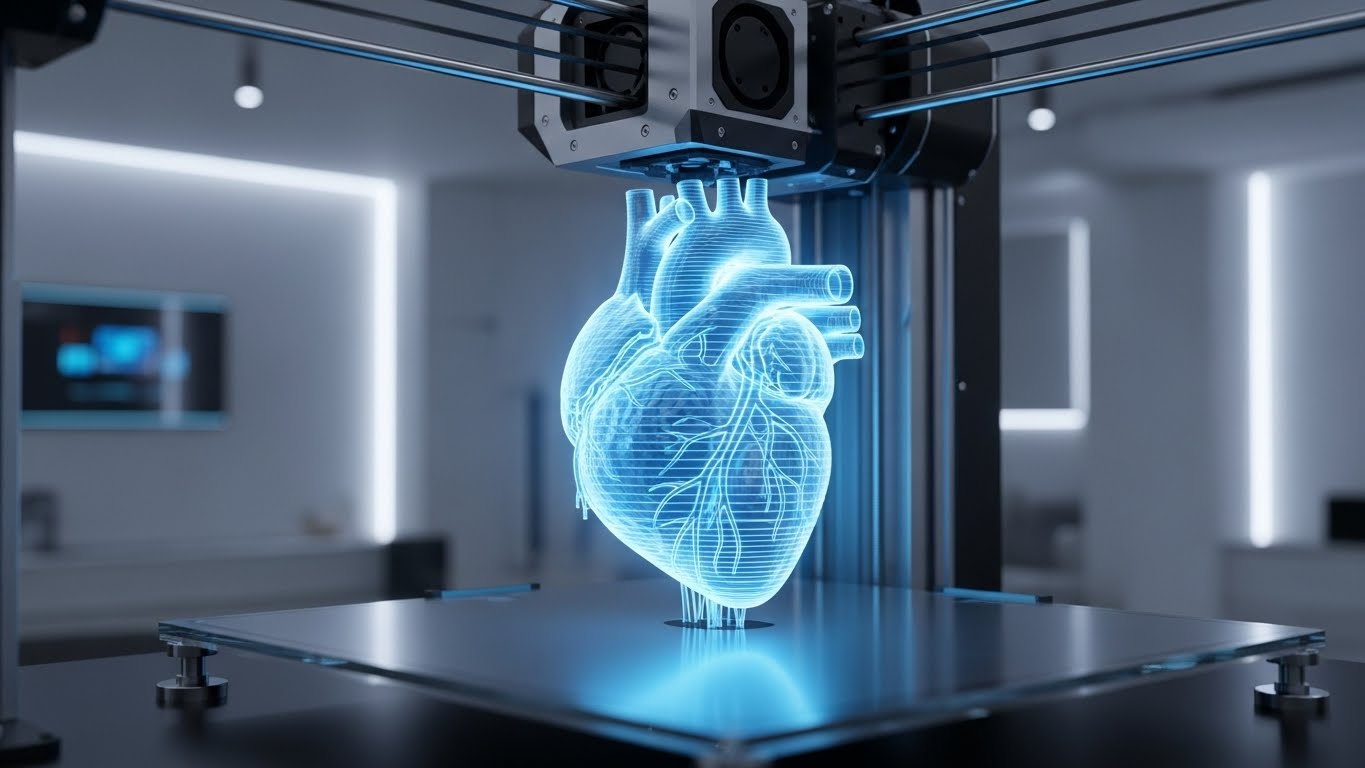
For decades, the idea of “printing” a human organ was a slow, multi-million dollar process reserved for elite research labs. But as of January 16, 2026, the unveiling of the first Desktop Bio-Printer prototype has changed the game. Imagine a device the size of a coffee maker, sitting in your bathroom, capable of “printing” living tissue.
1. The Era of “Self-Repair”
We are entering a phase where the human body is treated more like a machine with replaceable parts.
- On-Demand Organs: Instead of waiting years on an organ donor list, a patient could have their own stem cells cultured and “printed” into a new kidney or liver within days—at home.
- Instant Wound Care: Imagine “printing” a custom skin patch for a severe burn or injury that perfectly matches your DNA, resulting in zero scarring and instant healing.
2. The Implications of Biological Longevity
If we can replace parts as they wear out, the concept of “old age” disappears.
- The 150-Year Life: With “printed” hearts and lungs, the average human lifespan could realistically reach 150 years.
- The Ethical Divide: Will this lead to a “Two-Tier” humanity where the wealthy are biologically immortal, while others remain subject to natural decay?
TechWhatIf Verdict
Home bio-printing is the ultimate tool for human sovereignty. However, we must regulate the “Blueprints.” If you can print a heart, what’s stopping someone from printing “enhanced” biology that makes them faster or stronger than a natural human?